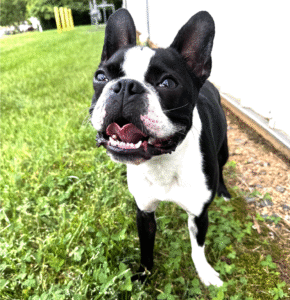



Short answer: Boston Terriers are not hypoallergenic. They have a short, smooth coat and usually shed less than many heavy-coated breeds, but they still produce dander, saliva, and skin proteins that can trigger dog allergies in humans.
That does not automatically mean every allergy sufferer has to avoid Boston Terriers. Some people with mild dog allergies tolerate them surprisingly well, especially with a smart cleaning and grooming routine. Others still react with sneezing, itchy eyes, skin irritation, or asthma symptoms.
So the real answer is not just “yes” or “no.” It depends on your allergy level, your home setup, your cleaning routine, and your reaction to the individual dog.
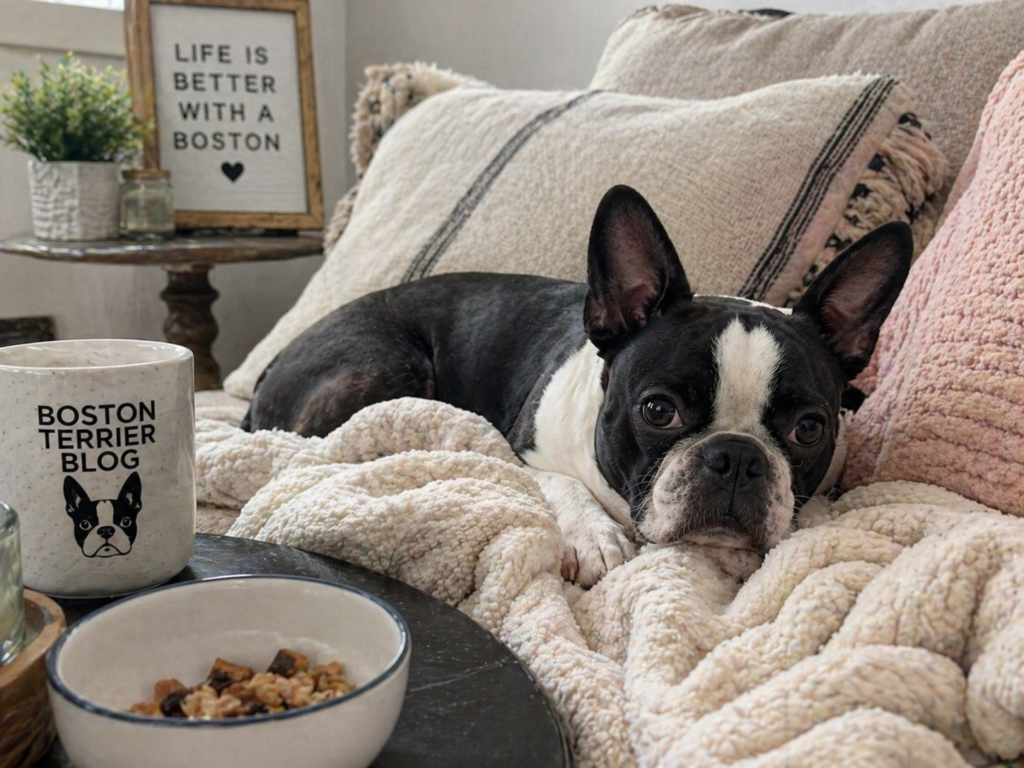
I’m Dzmitry, and my Boston Terrier Dumpling is a professional blanket thief, snack supervisor, and full-time lap warmer. He has that classic short Boston coat, so he does not leave giant clouds of fur around the house. But he still has skin, saliva, dander, and a very strong belief that humans exist to be cuddled.
And that is exactly where allergies get complicated.

The Short Answer: No, Boston Terriers Are Not Hypoallergenic
Boston Terriers are not considered a hypoallergenic dog breed.
But the word “hypoallergenic” can be misleading. No dog breed is completely allergy-proof. Every dog produces proteins that can trigger allergies in sensitive people. These proteins are found in dander, saliva, urine, and skin oils.
So when people ask whether Boston Terriers are hypoallergenic, the better question is:
Are Boston Terriers easier for some allergy sufferers to tolerate than other breeds?
For some people, yes.
Boston Terriers may be easier to manage than large, heavy-shedding, double-coated dogs because they are small, short-haired, and single-coated. But they are not in the same allergy-friendly category people usually associate with breeds like Poodles, Bichon Frises, Schnauzers, or Portuguese Water Dogs.
Quick reality check: Boston Terriers are not allergy-free. They may be more manageable for some people with mild dog allergies, but they can still cause allergic reactions.
What Are You Actually Allergic To?
Most people think dog allergies come from fur.
That is only partly true.
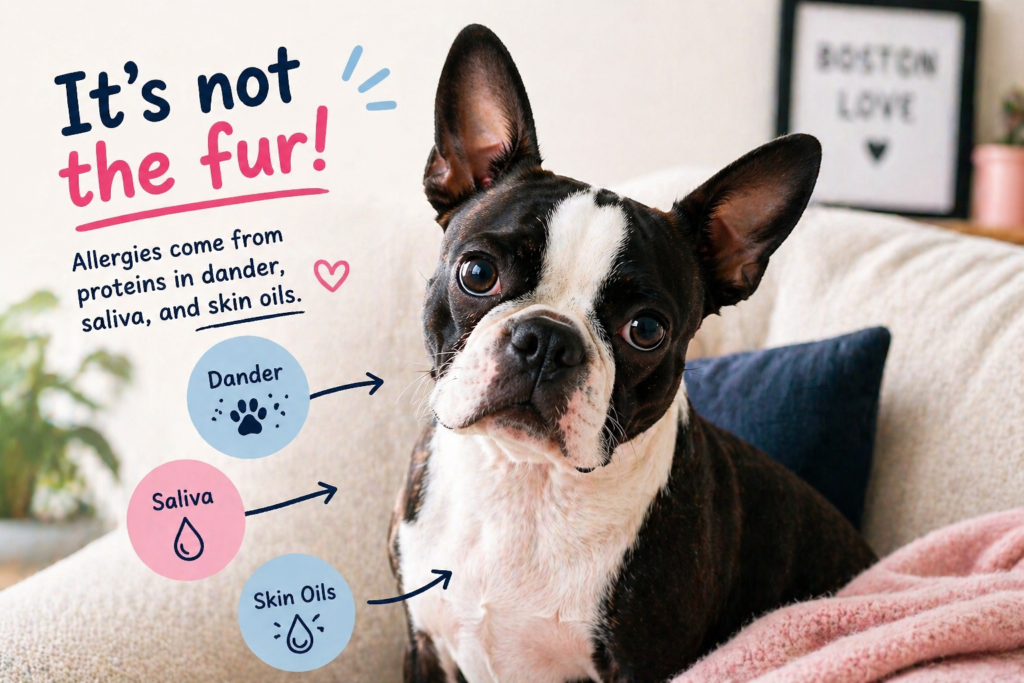
The fur itself is not usually the main problem. The real issue is the tiny allergy-triggering proteins dogs produce. These can be found in:
- Dander — tiny flakes of dead skin
- Saliva — especially after licking or grooming
- Urine
- Skin oils
- Dust and pollen carried on the dog’s coat
One of the major dog allergens is called Can f 1, which is found mainly in dog saliva and skin. You can read more about pet allergy triggers from the American Academy of Allergy, Asthma & Immunology.
Here is how dog allergens usually spread:
- Your dog licks themselves.
- Saliva dries on the coat.
- Dander and hair move around the house.
- Allergens land on furniture, rugs, bedding, and clothing.
- Your immune system overreacts.
That is why a short-haired dog can still cause allergies.
A Boston Terrier may shed less hair than a Labrador or Husky, but they still produce dander and saliva. And because Bostons are famously affectionate, they often want to sit on you, sleep near you, lick your hands, and press their little faces into your life as much as possible.
Cute? Absolutely.
Allergy-neutral? Not exactly.
Where Boston Terriers Fit on the Allergy Spectrum
Boston Terriers are usually best described as a lower-shedding but not hypoallergenic breed.
They have several traits that can help some allergy sufferers:
- Short, smooth coat
- Single coat with no thick undercoat
- Small body size
- Moderate shedding compared with many breeds
- Easy grooming routine
- Less hair trapped in carpets and furniture than long-haired breeds
But there are trade-offs.
Boston Terriers are very people-focused. Many of them are clingy in the best possible way. Dumpling, for example, believes personal space is a rumor. If there is a blanket, a couch, or a human lap nearby, he considers it shared property.
That closeness means more exposure to saliva, dander, and skin oils.
Boston Terriers may be easier for some allergy sufferers than heavy-shedding breeds, but they are still capable of triggering dog allergies.
They are not the worst choice for mild allergy sufferers. But they are not a guaranteed safe choice either.
Boston Terrier Allergy Symptoms in Humans
Dog allergy symptoms can show up quickly, or they can build slowly throughout the day.
Some people react within minutes. Others feel fine at first, then wake up congested the next morning.
Nose and Breathing Symptoms
- Sneezing
- Runny nose
- Stuffy nose
- Postnasal drip
- Itchy throat
- Coughing
- Wheezing
- Shortness of breath
Eye Symptoms
- Red eyes
- Itchy eyes
- Watery eyes
- Puffy eyelids
- Burning or gritty feeling
Skin Symptoms
- Hives
- Red patches
- Itchy skin
- Eczema flare-ups
- Irritation where the dog licked you
If you have asthma, dog allergies can be more serious. A Boston Terrier may still trigger wheezing or breathing trouble, even if the dog does not shed much. The Asthma and Allergy Foundation of America explains that pet allergens can worsen asthma and allergy symptoms in sensitive people.
Important: If dog exposure affects your breathing, talk to your doctor or allergist before bringing any dog home.
How to Know If You’re Allergic to Boston Terriers Before Getting One
This is the part people really need to take seriously.
Do not rely on a quick five-minute puppy cuddle.
That is not enough.
A short visit can give you false confidence because allergy symptoms are not always immediate. Some people feel fine during the visit, then get congested, itchy, or wheezy later that night.
1. Get Allergy Testing
An allergist can test whether you are allergic to dogs. This will not tell you exactly how you will react to a Boston Terrier, but it gives you a useful baseline.
2. Spend Real Time With Boston Terriers
Try to spend at least one or two hours with adult Boston Terriers, not just puppies.
Puppies can produce different reactions than adult dogs, and their coats and grooming habits change as they grow.
3. Visit More Than Once
One visit is not enough. Try multiple visits on different days.
Pay attention to:
- Sneezing
- Eye irritation
- Skin reactions
- Chest tightness
- Symptoms later that evening
- Symptoms the next morning
4. Test Close Contact
Real life with a Boston Terrier means the dog may sit beside you, lick your hand, rub against your clothes, or nap on your blanket.
So test the kind of exposure you will actually have.
Sit near the dog. Pet them. Let them be close. Then monitor how your body responds.
5. Talk to Your Doctor About Options
For some people, allergy medication or immunotherapy may help reduce symptoms over time. But that decision should be made with a medical professional, especially if asthma is involved.

Can People With Allergies Live With a Boston Terrier?
Yes, some people with mild to moderate dog allergies can live happily with Boston Terriers.
But it usually requires a routine.
Not a crazy routine. Not a hospital-level cleaning routine. Just a consistent one.
The goal is simple:
Reduce allergen buildup before it takes over your home.
Here is the practical playbook.
1. Keep a Simple Grooming Routine
Boston Terriers are easy to groom, which is one of the nice things about the breed.
Their short coat does not need fancy trimming, but it still needs regular care.
A good allergy-friendly grooming routine includes:
- Brush your Boston 2–3 times per week
- Use a rubber curry brush or grooming mitt
- Wipe the coat with a damp microfiber cloth
- Bathe every 2–4 weeks, unless your vet recommends otherwise
- Clean facial folds gently
- Keep paws clean after outdoor walks
Do not over-bathe your Boston Terrier. Too much bathing can dry out the skin, which may lead to more flaking and irritation.
With Dumpling, the easiest habit is a quick wipe-down after walks. It takes less than a minute, but it helps remove dust, pollen, and whatever mysterious outdoor particles he proudly collected.
You may also like: Boston Terrier grooming guides.
2. Make the Bedroom Dog-Free
This is the rule Boston Terrier owners hate.
Because Bostons are world-class snugglers.
But if you have allergies, your bedroom should be your recovery zone. You spend hours breathing that air every night. If your pillow, blanket, and mattress are full of dander, your immune system never gets a break.
Try this:
- Keep your Boston out of the bedroom
- Keep the bedroom door closed
- Wash sheets weekly
- Use allergen-proof pillow covers
- Use a HEPA air purifier in the bedroom
- Do not let your Boston nap on your bed “just once”
Dumpling would strongly disagree with this advice.
But allergies do not care how cute a Boston looks under a blanket.
3. Use a HEPA Air Purifier
Air quality makes a big difference.
Dog allergens are tiny. They float, settle, get kicked back up, and move from room to room. A good HEPA air purifier can help reduce airborne particles, especially in the spaces where you spend the most time.
Best places for a purifier:
- Bedroom
- Living room
- Home office
Also consider:
- Changing HVAC filters regularly
- Using filters rated for pet dander
- Opening windows when weather allows
- Vacuuming before allergens build up
You do not need to buy the most expensive purifier on the market. But you do want one properly sized for the room.
HEPA Air Purifiers That Can Help With Pet Dander at Home
A HEPA air purifier will not make a Boston Terrier hypoallergenic, but it can help reduce airborne dust, pet dander, odors, and tiny particles that build up in rooms where your dog spends the most time.
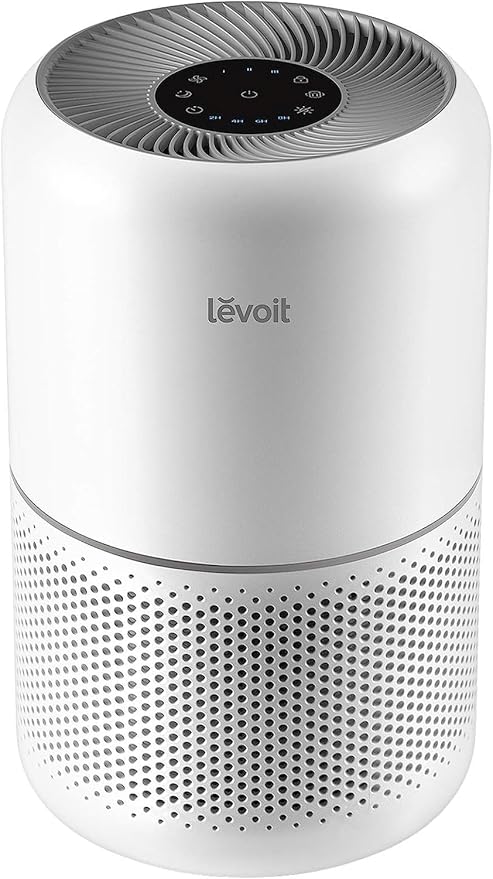
LEVOIT Core300-P Air Purifier
A popular compact air purifier with a 3-in-1 filter and sleep mode, useful for bedrooms, home offices, and smaller living spaces.
- Sleep mode
- 3-in-1 filter
- Pet hair & dust

Honeywell Allergen Plus Compact HEPA Air Purifier
A compact purifier designed for smaller rooms, with an air quality sensor, auto mode, and filtering support for pet dander, smoke, and odors.
- Auto mode
- Small rooms
- Pet dander

APH4000 HEPA Air Purifier for Large Rooms
A larger-room air purifier with washable pre-filter, AQI display, ECO mode, and pet mode for homes dealing with dust, pollen, and pet particles.
- Large rooms
- Pet mode
- AQI display
Dumpling-style tip: Put the purifier where your Boston actually spends time. A bedroom or living room purifier usually helps more than one sitting in a hallway doing nothing heroic.
4. Control Soft Surfaces
Soft surfaces are dander magnets.
Carpets, rugs, couches, throw pillows, dog beds, blankets — all of these can hold allergens long after the dog leaves the room.
To make your home easier on allergies:
- Wash dog blankets weekly
- Use washable couch covers
- Vacuum carpets and rugs with a HEPA-filter vacuum
- Choose hard flooring when possible
- Wash dog beds often
- Avoid letting your Boston claim every pillow in the house
The biggest offender is usually the “favorite blanket.” Every Boston has one. Dumpling has several, because apparently one blanket is not enough for a gentleman.
5. Reduce Face Licking and Hand-to-Eye Contact
Boston Terriers are affectionate.
Many are also enthusiastic face inspectors.
If saliva triggers your allergies, face licking can be a problem. Saliva contains allergen proteins, and your eyes, nose, and mouth are sensitive entry points.
Helpful habits:
- Wash hands after long cuddle sessions
- Avoid touching your eyes after petting your dog
- Gently discourage face licking
- Redirect licking into toys or belly rubs
- Keep tissues or saline spray nearby if your nose reacts
You do not have to stop loving on your dog. You just need to be smarter about where the allergens go.
6. Keep Your Boston’s Skin Healthy
A Boston Terrier with irritated skin may shed more dander.
That matters for both of you.
Healthy skin can help reduce flaking, itching, and extra dander around the home. It also makes your Boston more comfortable.
Support healthy skin by:
- Feeding a high-quality diet
- Asking your vet about omega-3 supplements
- Staying consistent with flea prevention
- Checking for itchy skin, redness, or hot spots
- Cleaning wrinkles and skin folds
- Visiting the vet if scratching or licking becomes excessive
Boston Terriers can have allergies of their own. Environmental allergies, food sensitivities, and skin irritation are not rare in the breed.
So if your Boston is itchy, flaky, or constantly licking, that is not just a dog problem. It can become a human allergy problem too.
Related guide: Best Food for Boston Terriers.
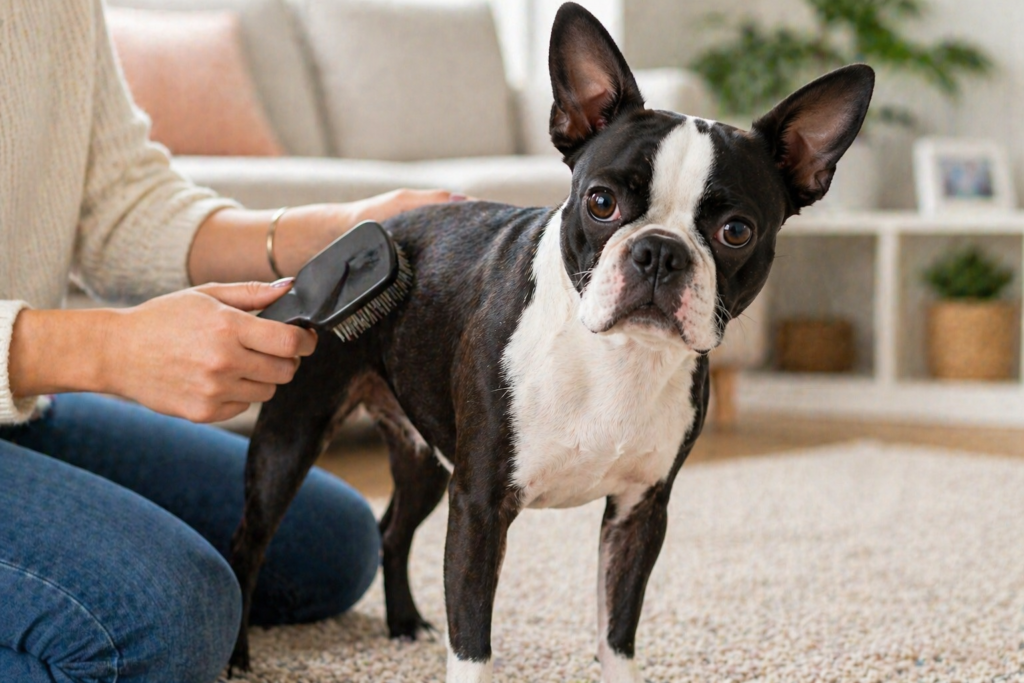
Brushes That Can Help Reduce Loose Hair and Dander
Boston Terriers have short coats, but regular brushing still helps remove loose hair, skin flakes, and the little bits of dander that can build up around the home.

Swihauk Self Cleaning Slicker Brush
A skin-friendly slicker brush for quick deshedding and simple short-coat maintenance.
- Self-cleaning
- Short coats
- Quick cleanup

NVNAN Pet Hair Removal Glove
A soft grooming glove that feels more like petting, especially for brush-shy Bostons.
- Soft glove
- Good for baths
- Massage feel

Aumuca Self-Cleaning Slicker Brush
A simple weekly deshedding tool for short-haired pets, with an easy-clean button.
- Deshedding
- Easy-clean
- Weekly use
Dumpling-style tip: Keep brushing short and positive. Two or three calm minutes with treats usually works better than one long grooming session.
When a Boston Terrier May Not Be the Right Fit
I love Boston Terriers. This whole blog exists because of them.
But being honest matters more than selling someone on a breed.
A Boston Terrier may not be the right choice if:
- You have severe dog-triggered asthma
- You wheeze after brief dog exposure
- You get strong hives from dog saliva
- Your child has uncontrolled pet allergies
- Your doctor advises against dog exposure
- You cannot keep up with cleaning and grooming
- You need a truly low-allergen breed
There is no shame in deciding the timing is not right.
It is much better to pause before adopting than to bring home a dog, fall in love, and later realize your health cannot handle it.
Boston Terriers bond deeply with their people. Rehoming is painful for the dog and the family.
So test first. Then decide.
Common Myths About Boston Terriers and Allergies
Myth 1: Short-Haired Dogs Are Hypoallergenic
Short hair does not mean allergy-free. Boston Terriers have short coats, but they still produce dander and saliva allergens.
Myth 2: Boston Terriers Do Not Shed
They do shed. Usually not heavily, but they still lose hair. You may see small, short hairs on clothing, blankets, and furniture.
Myth 3: If I React to One Dog, I’ll React to Every Boston the Same Way
Not always. People can react differently to individual dogs, even within the same breed. Coat condition, grooming, age, saliva exposure, and home environment can all affect symptoms.
Myth 4: Daily Baths Will Solve the Problem
Daily bathing can dry out your Boston’s skin and potentially make dander worse. A gentle bath every few weeks is usually more realistic, but your vet can help adjust that based on your dog’s skin.
Myth 5: Boston Terrier Mixes Are Automatically Hypoallergenic
Not necessarily. A Boston-Poodle mix may shed less, but allergen production is unpredictable. Mixed breeds can inherit coat traits from either parent, and no mix is guaranteed allergy-safe.
Best Home Setup for Allergy Sufferers With a Boston Terrier
Here is the simple version.
- Best flooring: hardwood, tile, vinyl, or laminate
- Best cleaning tool: HEPA-filter vacuum
- Best bedroom rule: no dog in bed, ideally no dog in bedroom
- Best grooming habit: brush several times a week and wipe the coat regularly
- Best air-quality upgrade: HEPA purifier in bedroom and living room
- Best daily habit: wash hands after cuddling
- Best mindset: manage allergens consistently instead of waiting until symptoms explode
Small habits matter.
One wipe-down does not change everything. One vacuum session does not magically remove all dander. But together, these routines can make life with a Boston much easier.
Are Boston Terriers Better for Allergies Than Other Dogs?
Compared with many heavy-shedding breeds, Boston Terriers may be easier for some people with allergies.
They usually shed less than breeds like:
- Labrador Retrievers
- German Shepherds
- Huskies
- Golden Retrievers
- Corgis
- Australian Shepherds
But they are usually not as allergy-friendly as breeds commonly recommended for allergy sufferers, such as:
- Poodles
- Bichon Frises
- Schnauzers
- Portuguese Water Dogs
- Maltese
Even then, no breed is guaranteed.
The best test is always real exposure. Not a breed list. Not a cute photo. Not a promise from a breeder.
Your own body gets the final vote.
Final Word: Should Allergy Sufferers Get a Boston Terrier?
Boston Terriers are not hypoallergenic.
But for some people with mild dog allergies, they can be a realistic and wonderful breed to live with.
Their short coat, small size, and moderate shedding can make allergen control easier than it would be with many larger or fluffier breeds. But their affectionate, close-contact personality means you will still be exposed to saliva, dander, and skin oils.
So the best answer is:
A Boston Terrier may work for some allergy sufferers, but only with testing, realistic expectations, and a consistent home routine.
Spend time with the breed first. Talk to your allergist if symptoms are more than mild. Build a cleaner home setup before the dog arrives. And be honest with yourself about what you can maintain.
Because once a Boston Terrier moves in, they do not just occupy your house.
They occupy your schedule, your blankets, your camera roll, and a suspiciously large part of your heart.
Dumpling would like me to add that all of this is still worth it.
And honestly? He has a point.
Boston Terrier Allergies for Humans FAQ
-
Are Boston Terriers hypoallergenic?
No. Boston Terriers are not hypoallergenic. They have a short, smooth coat and may shed less than many breeds, but they still produce dander, saliva, and skin proteins that can trigger allergies in humans. -
Are Boston Terriers good for people with allergies?
They can be manageable for some people with mild dog allergies, but they are not allergy-free. The best approach is to spend time with Boston Terriers before adopting and watch for symptoms. -
Do Boston Terriers shed a lot?
Boston Terriers usually shed a low to moderate amount. Their hair is short and fine, but it can still collect on clothing, furniture, blankets, and floors. -
What causes Boston Terrier allergies in humans?
Most dog allergies are caused by proteins found in dander, saliva, urine, and skin oils. Fur can spread these allergens, but the fur itself is not usually the main cause. -
Can I live with a Boston Terrier if I have asthma?
Maybe, but you should speak with your doctor or allergist first. Dog allergies can trigger asthma symptoms in some people, and breathing issues should be taken seriously. -
How often should I bathe a Boston Terrier if I have allergies?
Many Boston Terriers do well with bathing every two to four weeks, but this depends on the dog’s skin. Over-bathing can dry the skin and may increase irritation or flaking. Ask your vet if your Boston has sensitive skin.
-
What is the best way to test if I can tolerate a Boston Terrier?
Spend real time with adult Boston Terriers before adopting. Visit more than once, stay for at least an hour or two, and track your symptoms during and after each visit. Watch for delayed symptoms the next day.
Disclaimer: This article is intended for informational purposes only and is not a substitute for professional medical advice. Always consult your doctor or allergist about your specific situation before making decisions that could affect your health.